
Stand Up and Study Smart: How Standing Desks Boost Teen Focus!
Stand Up and Study Smart: How Standing Desks Boost Teen Focus!
Feb 09, 2026
Hey teens and parents! Picture this: It's 7 PM, homework is staring you down, and your brain feels like mush after hours at a desk. Sound like a typical study night? What if standing up could change everything? Standing desks are game-changers for grown-up kids like teens, turning long study sessions into focused power hours. Let's explore how these adjustable tables make studying sharper, easier, and way more fun!
Today's teens juggle online classes, exams, and endless screen time. Sitting slouched for hours leads to foggy brains, achy backs, and zero motivation. A standing desk lets you switch heights easily—sit for reading, stand for notes or math problems. Study becomes active, not a drag. The magic? Better blood flow and energy that keeps your mind locked in.
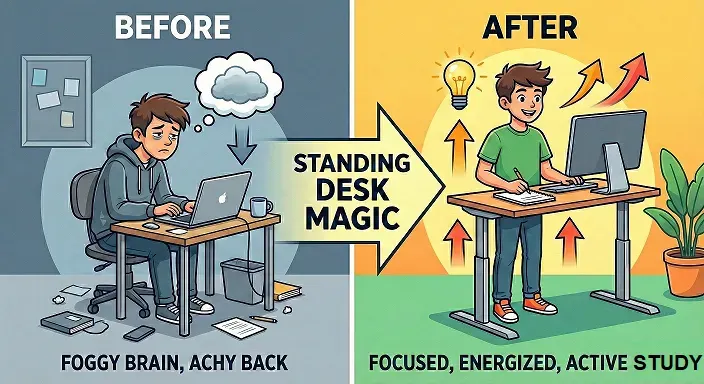
How Standing Desks Supercharge Study Focus
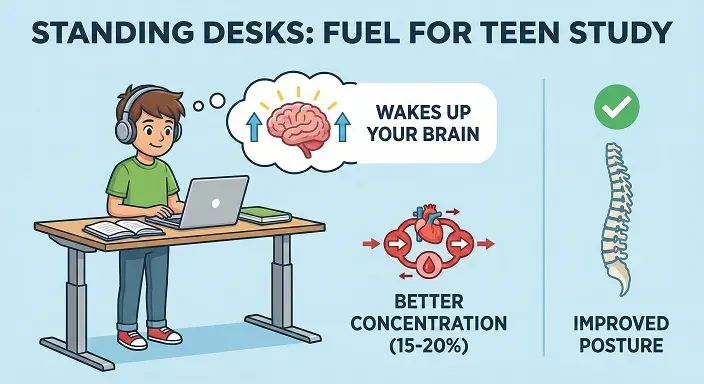
First off, standing wakes up your body and brain. When you sit too long, blood pools in your legs, starving your brain of oxygen. Stand up, and muscles pump that oxygen straight to your head—like fuel for a race car! Studies show teens who alternate between standing and sitting positions concentrate 15-20% better during study time. No more daydreaming mid-chapter; equations and essays flow smoother.
Think about study marathons for board exams or JEE prep. Standing desks fight "brain drain" by boosting alertness. Your posture straightens naturally, cutting neck strain from phones and laptops. This means fewer breaks for stretching and more time cracking tough problems. Teens report feeling "super focused" after 30 minutes standing—perfect for those 2-hour study blocks.
Plus, movement sneaks in without effort. Tiny shifts while standing mimic fidgeting, which sparks dopamine—the "feel-good" chemical that sharpens attention. Many parents have noticed that. Their teens are studying longer without whining. It's science—standing reduces restlessness, helping ADHD-prone kids lock into study mode.
Real Study Wins for Teens
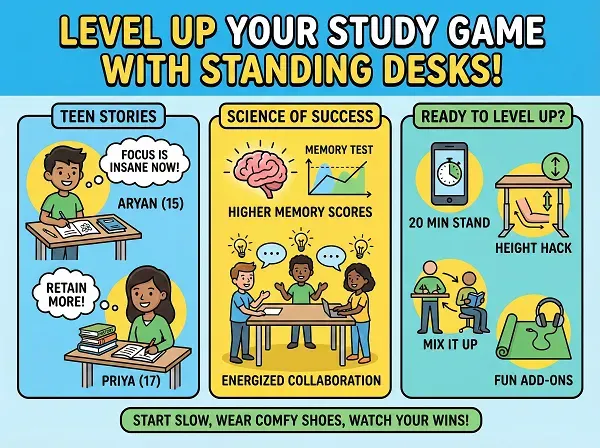
Meet Aryan, a 15-year-old from Mumbai. Glued to his chair, his grades slipped. Switched to a standing desk? "I blast through science notes standing—focus is insane now!" Or Priya, 17, prepping for NEET: "Standing for history revisions kills boredom; I retain more."
These aren't rare. Research backs it: Students using standing desks score higher on memory tests and feel less tired. For study groups, gather around a wide standing table—ideas bounce faster when everyone's energized upright.
Easy Ways to Add Standing to Your Study Routine
Ready to level up? Start simple—no big buys needed yet:
- Timers Rule: Stand 20 minutes every hour during study sessions. Use phone alarms.
- Height Hack: Adjust to elbow level—arms relaxed, screen at eye height.
- Mix It Up: Stand for active tasks like writing or flashcards; sit for heavy reading.
- Fun Add-Ons: Anti-fatigue mat for comfort, upbeat music for vibe.
- Track Progress: Note study hours and focus levels daily—watch improvements!
Start slow to avoid leg tiredness. Wear comfy shoes, stay hydrated, and soon you'll love standing for those study wins!.
Standing desks aren't just trendy—they're study heroes for teens. Ditch the slump, stand tall, and watch focus explode. Parents, surprise your teen with one; students, ask for a trial. Better posture, sharper mind, epic grades—your study game just got unbeatable. Who's ready to stand and conquer?