
Time Pressure, Pain, and the Sit–Stand Solution
Time Pressure, Pain, and the Sit–Stand Solution
Nov 10, 2025
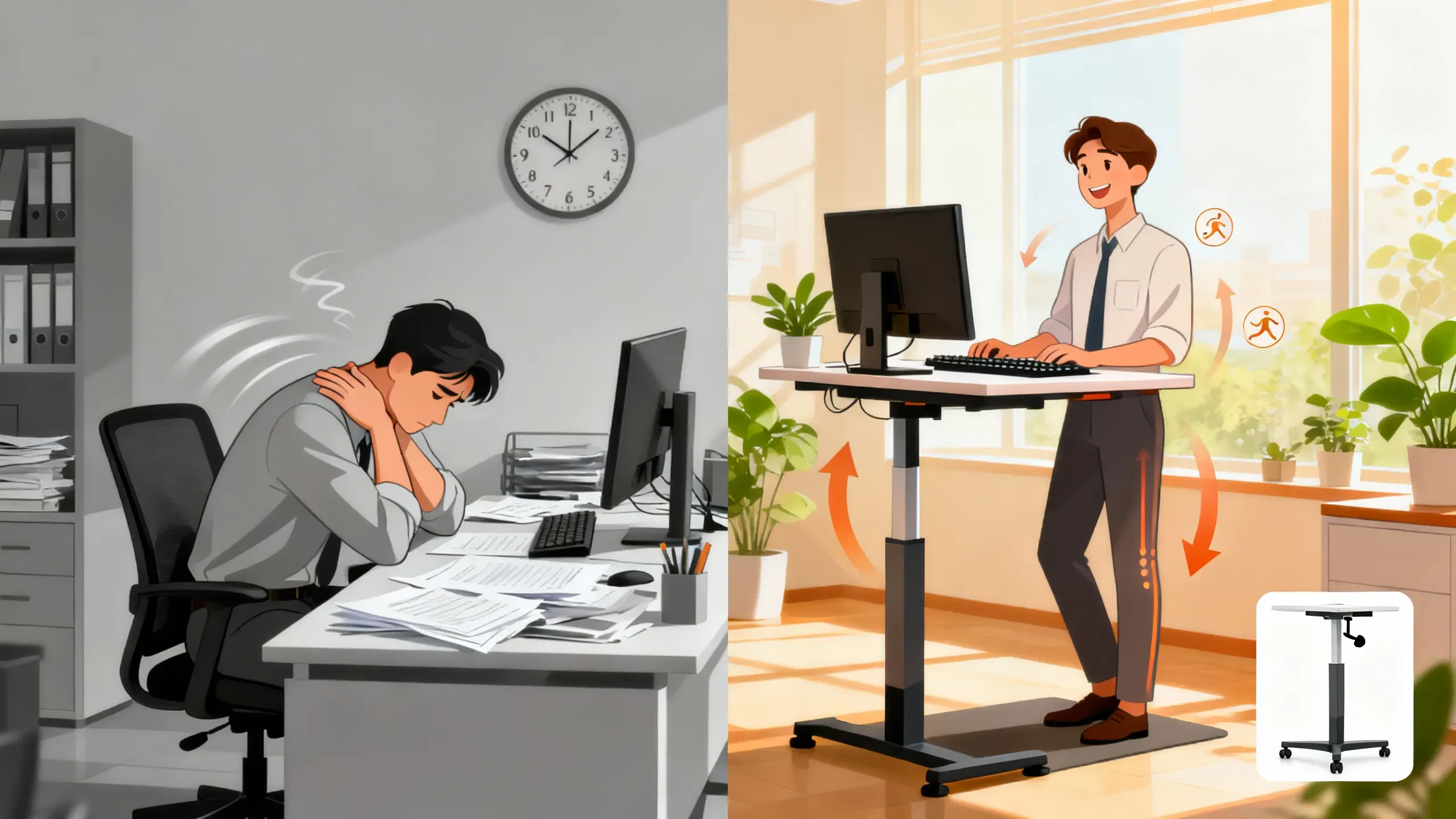
Many office workers face heavy workloads, tight deadlines, constant interruptions and unclear tasks. These things cause mental stress. Stress not only affects mood and sleep — it can also cause physical pain like neck, shoulder and back aches. How mental stress leads to physical problems when people are stressed or rushed they often sit stiffly: shoulders up, head forward, back slouched. Staying in one position for a long time or repeating small movements (typing, clicking) can strain muscles and tendons. Stress can also make muscles tense without you noticing. Over time this leads to soreness, tension headaches and more chance of injuries in the neck, shoulders and arms.
Things at work that make stress worse
- Too much work and not enough time to do it.
- Little control over how or when work gets done.
- Confusing job roles or unclear instructions.
- Working alone, poor teamwork or conflict with co-workers.
- Constant multitasking and interruptions.
- Poorly arranged office workspace.
What employers and workers can do Fixing this needs both workplace changes and personal habits.
Simple steps employers can take:
- Make job tasks clearer and set realistic deadlines.
- Reduce unnecessary meetings and protect focused work time.
- Let people have more control over how they do their work.
- Encourage team check-ins and support between co-workers.
- Teach managers to spot signs of overload and take action.
Simple things workers can try:
- Block short periods for focused work (turn off notifications).
- Take short breaks every hour to stand, stretch or walk.
- Prioritize tasks and ask for help when the workload is too high.
- Talk to your manager if things are unclear or too busy.
How a better workstation helps A poor desk setup makes stress-related pain worse. If your monitor is too low, your keyboard too high, or your chair doesn’t support you, you are more likely to sit in a harmful position when you’re busy or stressed.
Why height-adjustable tables (sit‑stand desks) help Height-adjustable tables let you change between sitting and standing. That helps in several ways:
- Reduces long periods of sitting that cause stiffness.
- Encourages small movements and posture changes, lowering muscle tension.
- Improves blood flow, which can reduce fatigue and stiffness.
- A quick change of position can also refresh your mind and reduce mental fatigue.
How to use a sit‑stand desk well
- Don’t just stand all day — switch between sitting and standing (for example, 30–60 minutes sitting, then 15–30 minutes standing).
- Stand for phone calls or small tasks.
- Set your monitor at eye level and keep the keyboard at a comfortable height.
- Combine the desk with a good chair, an adjustable monitor, and an ergonomic keyboard or mouse.
- Take short movement breaks to walk or stretch.
Bottom line: mental stress from heavy workload, interruptions and low control can cause both emotional problems and physical pain. Fixing job demands, improving support, and using better workstations can help. A height-adjustable table is a simple, practical tool that reduces sitting time, eases muscle tension and gives both the body and mind a quick reset during a busy day. Implemented with clear work practices and small movement breaks, it can lower pain, reduce stress and help people feel better and work better.